“When breathing stops at night – sleep and cardiovascular risk.”
The benefits of sufficient, undisturbed sleep are not only noticeable to us personally, but also scientifically proven. Healthy sleep is fundamentally important for our physical and mental regeneration, immune regulation, growth, memory formation, and mood. Insufficient sleep not only affects our well-being in the short term the following day, but can also have consequences for our health.
Healthy sleep is now one of the “Life's Essential 8,” the cornerstones of cardiovascular health (which also include healthy eating, sufficient exercise, avoiding nicotine, preventing or reducing obesity, high blood pressure, and elevated sugar and cholesterol levels).
Chronic sleep disorders have long-term effects. They increase the risk of other diseases—this is particularly true for cardiovascular diseases.
Disturbed sleep: a risk factor for the cardiovascular system!
Here, sleep-related breathing disorders (SBAS), especially obstructive sleep apnea (OSA), represent the most common organic sleep disorders.
What happens at night?
OSA causes narrowing or collapse of the upper airways in the throat during sleep, resulting in oxygen depletion and brief wake-up reactions with extreme sympathetic nervous system activation. This in turn leads to nocturnal fluctuations in heart rate and blood pressure and further promotes the development of high blood pressure, cardiac arrhythmia (including atrial fibrillation in 60-70% of cases), heart failure, coronary heart disease (2- to 3-fold increase), and neurodegenerative diseases such as dementia.
Translated with DeepL.com (free version)
The level of severity
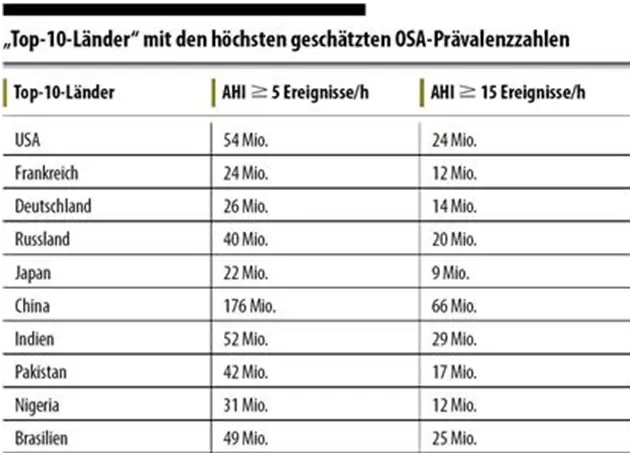
During an examination, the number of breathing disturbances per hour (apnea-hypopnea index = AHI) is used to make a diagnosis. The AHI also determines the severity. Current epidemiological studies show high OSA prevalence rates at the level of a widespread disease. Age is another risk factor.
In addition to nocturnal positive airway pressure therapy (PAP or cPAP) as first-line treatment, there are now a number of alternative therapies available that can be used in cases of intolerance to respiratory therapy:
- mandibular advancement splint
- Measures to prevent supine position
- Hypoglossal nerve stimulation therapy
Of course, if you are overweight, accompanying weight-loss measures should be implemented, but these alone rarely lead to complete OSA remission.
Confirming the diagnosis
The current diagnostic gold standard in sleep medicine continues to be sleep laboratory testing, known as polysomnography (PSG). However, sleep medicine diagnostics are increasingly shifting to patients' homes. This means that sleep can be measured not only in the patient's familiar environment, but also over several nights. This also allows the assessment of individual night-to-night dynamics. At the same time, vital parameters can be measured over several hours during sleep. Another advantage of simpler sensor technology is the improved implementation of primary preventive measures to prevent chronic sleep disorders – in line with Kurt Tucholsky's saying: “Give people more sleep – they will be more awake when they are awake!”
With the right, individually tailored, and compatible choice of therapy, clear primary and secondary preventive measures can be taken to ensure cardiovascular stability. Sleep apnea and noticeable snoring should therefore not simply be ignored. Ask not only your doctor but also your partner about this.
Conclusion
Sleep disorders, especially sleep-related breathing disorders, are cardiovascular risk factors. They have a high prevalence, which increases with age.
Sleep-related breathing disorders can be treated using various methods.
Therefore, patients with cardiovascular disease should always be asked about sleep disorders.
References: including issue of Cardio News, October 27, 2023, page 18